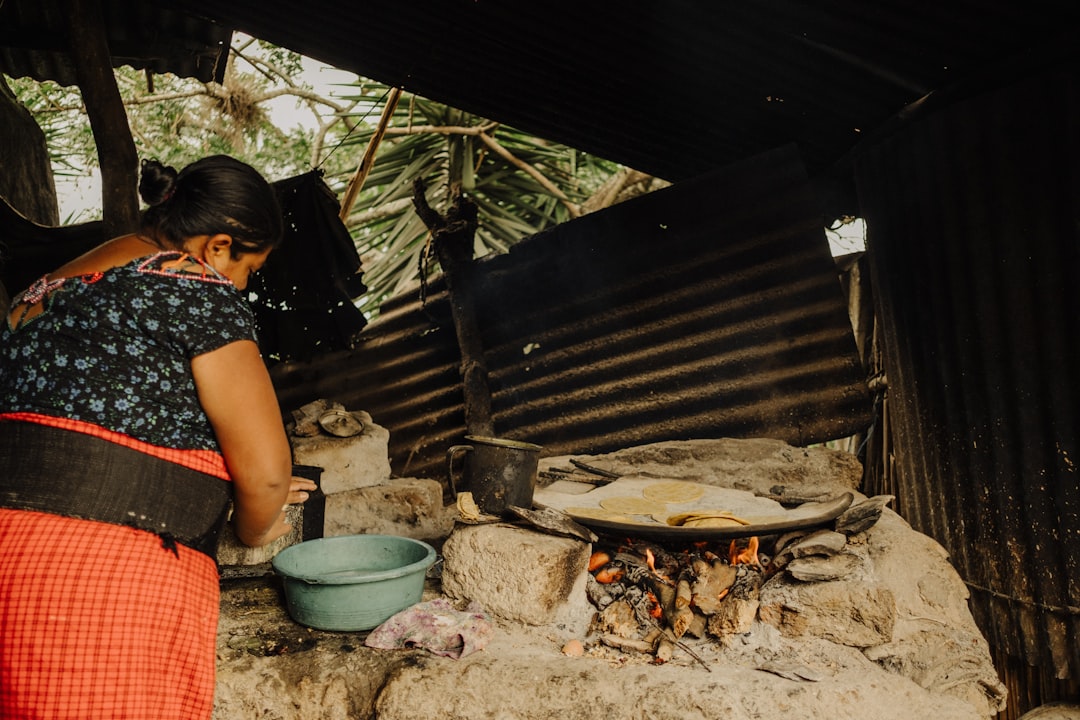
In many developing regions, traditional cooking methods still dominate households due to reliance on charcoal, firewood, or kerosene. These methods pose significant health risks, contribute to deforestation, and release high levels of indoor and outdoor air pollution. As communities aim for sustainable development, the deployment of clean cookstoves has become vital. Innovations in clean cookstove technologies are transforming how households access efficient and environmentally friendly cooking solutions.
These advancements align with global efforts to promote clean energy solutions and support initiatives that advance sustainability. Organizations increasingly recognize that integrating these technologies with broader ESG solutions offers a pathway to impactful change. The growing focus on corporate social responsibility initiatives underscores the importance of sustainable practices that benefit both communities and stakeholders.
Traditional cooking practices are responsible for a multitude of health and environmental issues. Indoor air pollution from smoke and soot affects millions, resulting in respiratory illnesses, especially among women and children. Environmental degradation caused by deforestation for firewood and charcoal production further exacerbates these challenges. Despite the need, the adoption of clean cookstoves faces barriers such as high costs, lack of awareness, and cultural preferences. Governments and NGOs have tried to promote adoption through various programs, but often face difficulties scaling these solutions sustainably.
Additionally, the voluntary carbon market has emerged as an important mechanism to incentivize emissions reductions, yet integrating cookstove projects into these markets remains complex. Achieving widespread adoption of clean cookstoves demands innovative solutions that address environmental, health, and social aspects holistically.
Recent innovator efforts focus on developing superior clean cookstove technologies that are affordable, durable, and easy to use. Innovations include improved combustion designs that drastically reduce emissions and fuel consumption. Many companies are also incorporating renewable energy concepts, such as solar-powered stoves, into their product offerings. These innovations are often embedded within larger sustainability partnerships involving governments, NGOs, and private enterprises. Collaborations aim to enhance distribution networks, create financing models, and raise awareness of health and environmental benefits. In addition, organizations integrate ESG solutions into their projects, ensuring that social impacts are maximized and environmental benefits are measurable.
Incorporating CSR initiatives centered around community engagement and education further accelerates adoption. Engaging the voluntary carbon market allows projects to generate tradable carbon credits, making them financially sustainable over the long term.
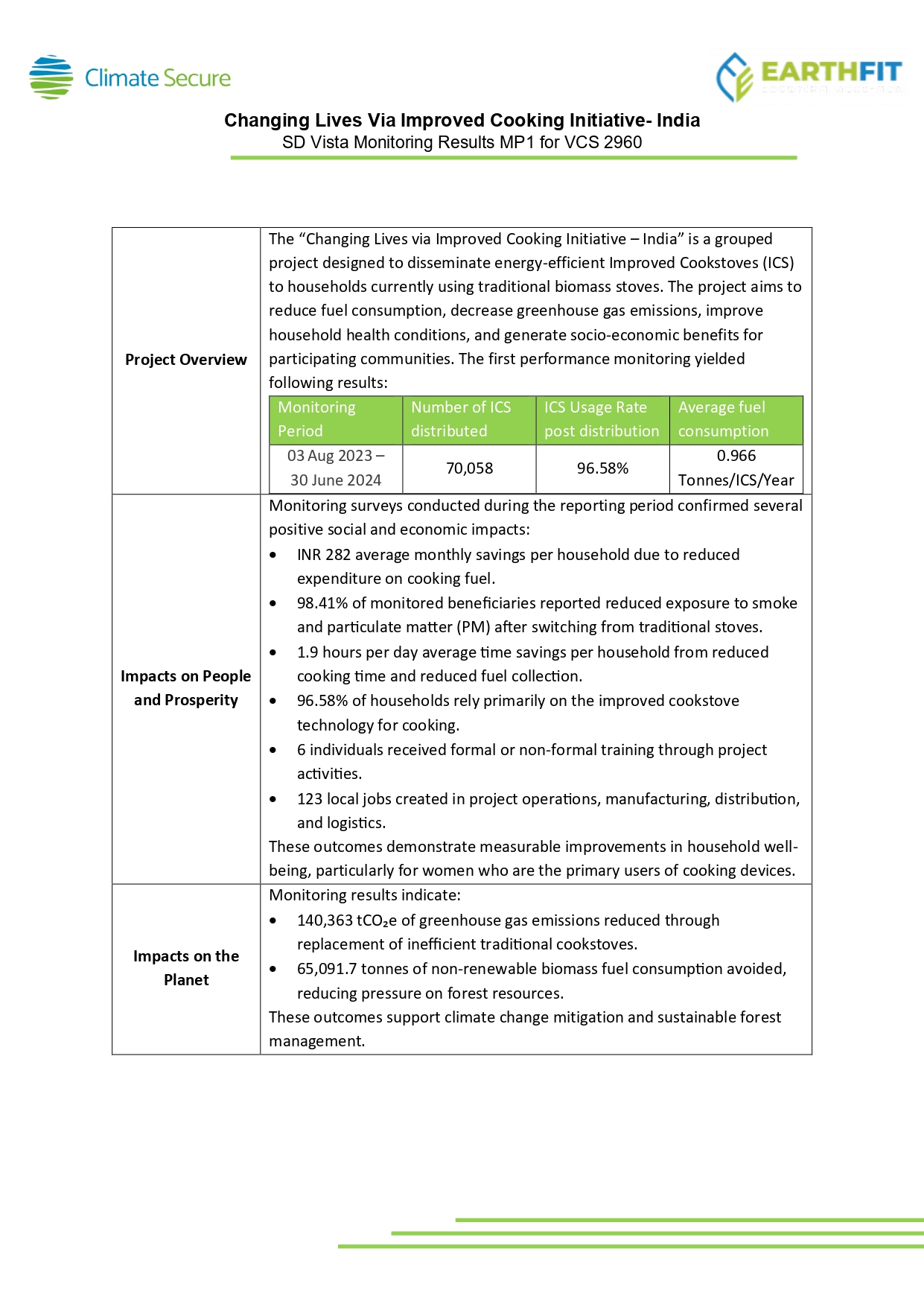
The results of adopting these innovative clean cookstove technologies have been promising. Pilot projects have demonstrated significant reductions in indoor air pollution and fuel needs, leading to improved health outcomes. The introduction of solar and biomass-based cookstoves has lowered greenhouse gas emissions, aligning with broader climate goals. These projects have also fostered economic opportunities within communities, including job creation in manufacturing and maintenance.
Through strategic sustainability partnerships, larger-scale deployment has become feasible, creating a ripple effect across regions. Participation in the voluntary carbon market has provided financial incentives to scale these solutions, with some projects generating verifiable carbon credits that contribute to corporate ESG commitments. The combination of technological advances and collaborative frameworks has created a sustainable model for widespread adoption.
One key insight is that technological innovation alone is not enough. Success depends on integrating clean cookstove solutions into comprehensive programs that include community education and local stakeholder involvement. Engaging women in training and distribution activities increases acceptance and effectiveness. Another important lesson is that aligning projects with CSR initiatives enhances credibility and attracts additional funding and partnerships.
The importance of transparent measurement and reporting cannot be overstated, particularly in relation to ESG solutions and voluntary carbon market engagement. Moreover, establishing sustainability partnerships ensures a shared responsibility among all stakeholders, fostering long-term commitment. As markets evolve, leveraging new financial mechanisms within the voluntary carbon market offers promising pathways for scalable impact. Earthfit Solutions supports this ecosystem by providing expertise in deploying innovative clean cookstove initiatives that complement broader sustainability and CSR efforts, ensuring meaningful progress toward clean energy solutions.
Innovations in clean cookstove technologies are paving the way for healthier, more sustainable communities. These advancements reduce health risks, lower environmental impacts, and open new avenues for economic development. The importance of strategic partnerships and integrating these solutions into broader sustainability initiatives cannot be overstated. Engagement in the voluntary carbon market helps unlock additional funding sources, making wide-scale adoption feasible.
Earthfit Solutions plays a critical role in this landscape by supporting organizations in implementing advanced clean cookstove projects. Its expertise ensures these initiatives align with ESG solutions and CSR goals, facilitating meaningful impact. As the field continues to evolve, ongoing innovation and collaboration will be essential to achieving a cleaner, healthier future for all.


Discover impactful CSR initiatives for clean energy and sustainability in 2026. Explore innovative strategies that make a difference!

Explore how clean energy solutions, like clean cookstoves, pave the way for a sustainable future driven by policy changes.
Copyright © 2025 EARTHFIT. All Rights Reserved. Designed and developed by Five Online