Paving the Way for a Greener Future
As the world advances towards a more sustainable future, the importance of clean energy solutions has never been more evident. Transitioning from traditional cookstoves that emit harmful pollutants to clean cookstoves is vital in reducing global carbon emissions and improving health outcomes, especially in developing regions. Alongside this shift, businesses and organizations are increasingly adopting Environmental, Social, and Governance (ESG) solutions, integrating sustainability into their core strategies. Corporate Social Responsibility (CSR) initiatives further demonstrate commitment to environmental stewardship, fostering trust with stakeholders and communities alike.
This comprehensive guide delves into the significance of clean cookstoves, the role of ESG solutions and CSR initiatives, and how sustainability partnerships and voluntary carbon markets contribute to a healthier planet. We will explore how these elements intertwine to create impactful change and highlight how Earthfit Solutions supports organizations in their journey toward sustainability.
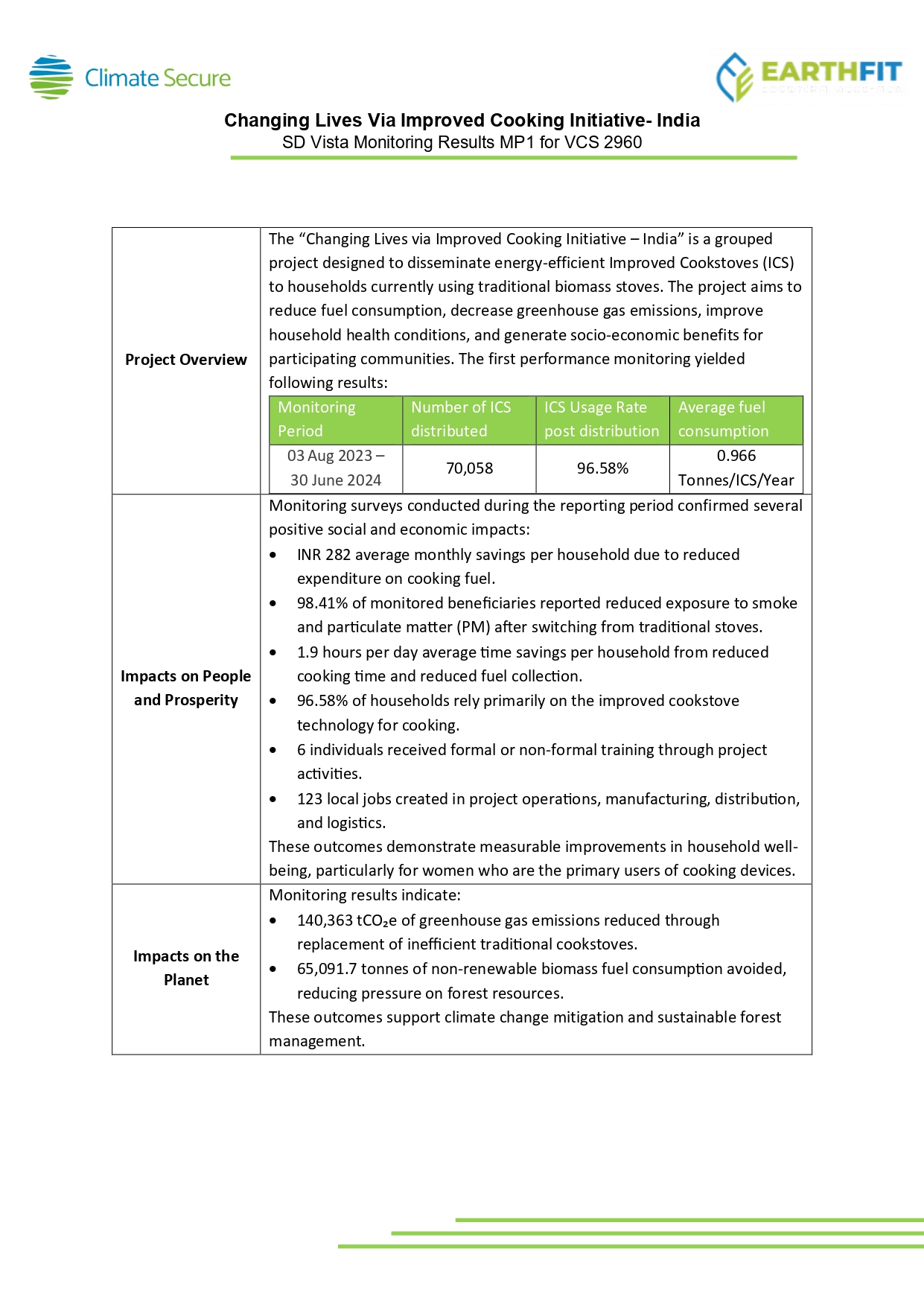
Traditionally, many households globally depend on solid fuels like wood, charcoal, or dung for cooking. These methods produce indoor air pollution and release a considerable amount of carbon dioxide and black carbon into the atmosphere. Clean cookstoves are designed to address these issues by providing an efficient, alternative cooking technology that reduces harmful emissions and enhances safety.
Implementing clean cookstoves offers multiple benefits. For individuals, health risks from smoke inhalation diminish significantly. For the environment, they contribute to lowering greenhouse gas emissions. Economically, they can reduce fuel consumption and expenses over time. Adoption of clean cookstoves is especially crucial in regions where access to reliable energy sources is limited, making it a key component of sustainable development goals.
Promoting these stoves involves various challenges, including affordability, cultural acceptance, and distribution logistics. Addressing these issues requires strategic partnerships and effective outreach to demonstrate the benefits and ensure widespread adoption. While initially focused on health and environmental improvements, the positive impacts extend to economic empowerment by enabling women and marginalized communities to save time and resources.
Businesses increasingly recognize the importance of incorporating clean energy solutions into their operations. Transitioning to renewable energy sources, improving energy efficiency, and supporting clean cookstove programs align with corporate sustainability goals. These initiatives not only reduce environmental impacts but also resonate with consumers who prioritize eco-friendly products and practices.
Adopting clean energy solutions supports companies in achieving their ESG objectives. ESG solutions encompass environmental responsibility, social impact, and effective governance. For example, a company promoting clean cookstoves as part of its corporate sustainability initiatives demonstrates its commitment to reducing its carbon footprint and supporting community well-being.
Implementing these solutions can involve various strategies, from investing in renewable energy projects to partnering with local organizations to distribute clean cookstoves. Transparency and accountability are essential in reporting progress and results. Emphasizing these efforts in corporate communication can enhance brand reputation and foster stakeholder trust.
Corporate Social Responsibility initiatives serve as practical approaches for organizations to contribute positively to society and the environment. By supporting projects such as clean cookstove distribution in vulnerable communities, companies demonstrate their commitment to sustainable development.
Effective CSR initiatives are rooted in genuine engagement and partnership with local stakeholders. They often involve capacity building, education, and providing access to clean energy technologies. These programs can also serve as pilot projects to test innovative solutions and models that can be scaled up or replicated elsewhere.
Beyond direct environmental benefits, CSR initiatives help build social capital and community resilience. They generate goodwill, strengthen relationships with stakeholders, and sometimes even open new markets. When companies incorporate sustainability actions into their CSR strategies, they foster a culture of responsibility that extends beyond profit motives.
Collaborating for Greater Impact
Achieving meaningful progress in sustainability often requires collaboration beyond individual enterprises. Sustainability partnerships bring together governments, NGOs, private sector entities, and communities to address complex environmental and social challenges.
These partnerships enable resource sharing, knowledge exchange, and joint action plans. For instance, collaborating with local organizations can improve the distribution and acceptance of clean cookstoves, ensuring that solutions are appropriate for specific cultural and geographic contexts.
Such collaborations also amplify the reach of initiatives, attract funding, and facilitate policy influence. When organizations work together toward common goals, they generate greater impact than any one entity could achieve alone. Building these alliances is fundamental to advancing widespread adoption of clean energy technologies and achieving sustainable development objectives.
The voluntary carbon market provides a platform for organizations to offset their carbon emissions by investing in environmental projects. These projects—such as reforestation, renewable energy, and clean cookstove initiatives—generate carbon credits that can be purchased voluntarily to compensate for emissions created elsewhere.
Engagement with the voluntary carbon market underscores an organization’s commitment to sustainability and climate mitigation. It allows companies to demonstrate real action while supporting projects that have additional social and environmental benefits.
Participation in this market requires transparent measurement, reporting, and verification of emission reductions. Many organizations use carbon credits to offset unavoidable emissions, improve their ESG profiles, and meet stakeholder expectations. Investing in carbon market projects related to clean cookstoves, for example, simultaneously advances climate goals and supports local economic development.
Earthfit Solutions plays a pivotal role in helping organizations realize their sustainability ambitions through tailored, impactful initiatives. Their expertise spans deploying clean energy solutions, facilitating ESG compliance, and establishing effective CSR programs. By partnering with local communities and stakeholders, Earthfit Solutions ensures that sustainability efforts are relevant, scalable, and sustainable.
The company's approach emphasizes building strategic sustainability partnerships that drive collective impact. Whether distributing clean cookstoves or integrating renewable energy projects into business strategies, Earthfit Solutions champions innovative solutions that align with organizational values.
Furthermore, they assist clients in engaging with the voluntary carbon market, ensuring careful assessment and accurate reporting of emission reductions. Their holistic approach helps organizations not only meet their environmental commitments but also enhance their social responsibility and long-term resilience.
In conclusion, advancing towards a sustainable future requires integrated efforts across multiple dimensions—technology, collaboration, responsibility, and market mechanisms. Clean cookstoves and clean energy solutions lay the foundation for healthier communities and a healthier planet. Coupled with strong ESG solutions and CSR initiatives, supported by sustainability partnerships and voluntary carbon market investments, organizations can make meaningful strides toward sustainability. Earthfit Solutions is dedicated to supporting organizations at every step of this journey, making impactful contributions toward a cleaner, greener, and more sustainable future.


Discover impactful CSR initiatives for clean energy and sustainability in 2026. Explore innovative strategies that make a difference!

Explore how sustainability partnerships shape clean energy policies globally, fostering innovation and environmental stewardship.
Copyright © 2025 EARTHFIT. All Rights Reserved. Designed and developed by Five Online