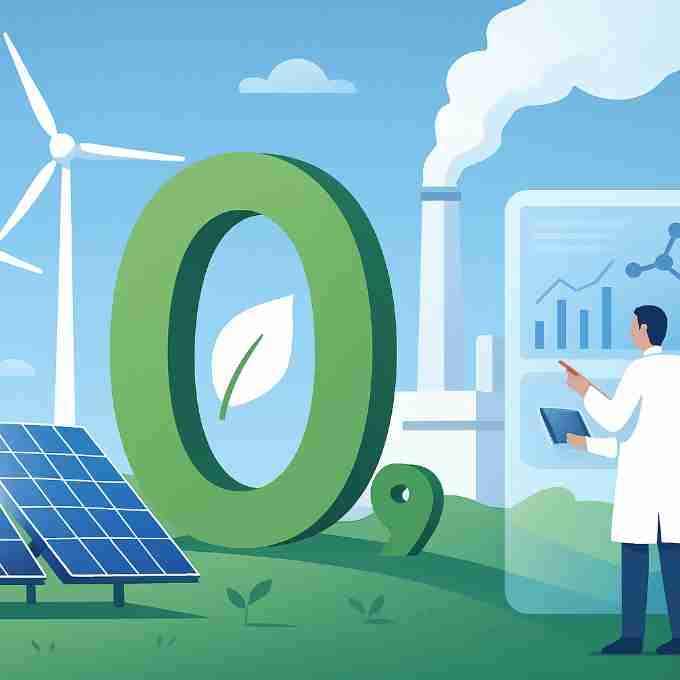
The pursuit of net-zero emissions has become the central goal for governments, industries, and environmental advocates worldwide. As climate change accelerates, the development of innovative technologies that drastically reduce greenhouse gases is crucial. In 2026, recent breakthroughs in net-zero emissions technology are shaping a sustainable future, offering promising solutions to lessen our carbon footprint and combat global warming. This article explores the latest advancements, analyzes their potential impact, and discusses what they mean for the planet’s future.
The concept of achieving net-zero emissions involves balancing the amount of greenhouse gases emitted with an equivalent amount removed from the atmosphere. This balance aims to keep global temperature rise within manageable limits. Recent developments in 2026 demonstrate significant progress across different sectors, including renewable energy, carbon capture, and sustainable manufacturing.
One of the most notable trends is the advancement of renewable energy technologies. Solar panels and wind turbines continue to improve in efficiency and cost-effectiveness, making clean energy accessible to more regions. Innovations in energy storage systems—such as large-scale batteries—have also emerged, solving the intermittent nature of renewable sources.
Carbon capture and storage (CCS) technology has seen remarkable breakthroughs. New methods allow for more efficient capture of carbon dioxide from industrial processes and even directly from the air. These systems are becoming more scalable and economically viable, which is vital for sectors that are traditionally hard to decarbonize.
Similarly, sustainable manufacturing processes are evolving rapidly. Companies are adopting circular economy principles, utilizing waste products, and integrating eco-friendly materials. Innovations in green hydrogen production are providing alternative energy sources for transportation and heavy industry, further reducing reliance on fossil fuels.
New generations of solar panels now achieve higher efficiencies, crossing the 30% threshold, while decreasing manufacturing costs. Emerging materials such as perovskites have gained commercial traction, offering flexible, lightweight options that can be integrated into building materials or even wearable devices.
Offshore wind technology has reached new heights with larger blades and more durable materials. These turbines can generate power in deeper waters, where wind is stronger and more consistent. The integration of floating turbine platforms allows for deployment in previously inaccessible locations, increasing clean energy capacity.
Research into solid-state batteries and new chemistries has accelerated. These batteries offer higher energy density, longer life spans, and improved safety features. Such advancements enable grid stability and better management of renewable energy intermittency.
Direct air capture (DAC) technology has progressed toward commercial viability. New sorbent materials and system designs have improved the energy efficiency and economics of capturing CO2 directly from the atmosphere. Some projects now produce high-purity carbon that can be stored underground or repurposed for industrial use.
Green hydrogen, produced using renewable energy, is gaining momentum. Innovations in electrolysis technology have reduced costs significantly, making it a competitive fuel source for heavy transportation, steelmaking, and chemical manufacturing.
Manufacturers are implementing breakthrough processes that cut emissions from cement, steel, and chemical industries. Techniques such as using biomass fuels, integrating carbon capture, and employing alternative raw materials are becoming mainstream.
The rapid evolution of these technologies demonstrates an industry-wide commitment to reaching net-zero emissions. The improvements in renewable energy are particularly impactful because they decrease reliance on fossil fuels, which remain the largest source of carbon emissions.
Furthermore, the advancements in carbon capture technologies address the unavoidable emissions from industrial facilities. The ability to scale up DAC explains how sectors like cement and steel manufacturing can meet their climate goals without compromising growth or productivity.
The integration of green hydrogen into energy systems offers a versatile solution to decarbonize sectors that are difficult to electrify directly. This approach also complements renewable energy by providing a storage and transportation fuel that produces no greenhouse gases when burned.
However, these technological breakthroughs pose challenges as well. High costs and infrastructure needs remain hurdles for widespread adoption. Policymakers and industry leaders must create supportive frameworks to facilitate deployment and ensure these technologies reach their full potential.
Another key insight is the increasing importance of a circular economy model. By recycling materials and reducing waste, industries can further lower their carbon footprints. This holistic approach aligns with the overall goal of achieving net-zero emissions in a sustainable and economically viable manner.
The advancements in net-zero emissions technology in 2026 have broad implications for climate policy and global economic structures. Countries that invest early in these solutions can lead in green technology and renewable energy sectors, gaining both economic and environmental advantages.
For businesses, adopting these innovations means they can meet stricter emissions regulations while maintaining competitiveness. The decrease in costs for renewables and CCS technologies will likely incentivize more companies to integrate sustainability into their core strategies.
At a societal level, these breakthroughs can accelerate the transition towards a low-carbon economy, creating new jobs and driving innovation across multiple industries. Enhanced energy storage and green hydrogen production could also lead to more resilient energy grids capable of withstanding climate-related disruptions.
From a future perspective, continued research and development are essential. As these technologies mature, their integration into daily life and industrial processes will become more seamless. Governments and private sector collaborations are vital to scale investments and overcome remaining technical and financial barriers.
Moreover, these breakthroughs contribute essential tools to global climate commitments under frameworks like the Paris Agreement. They provide tangible pathways for achieving net-zero emissions by mid-century, a critical milestone for limiting global temperature rise and avoiding the worst impacts of climate change.
In 2026, the landscape of net-zero emissions technology is transforming rapidly, driven by remarkable innovations across renewable energy, carbon removal, and sustainable manufacturing. These recent breakthroughs exemplify how technological progress can address the complex challenge of climate change and pave the way for a greener future.
The advancements in solar, wind, energy storage, and carbon capture systems are not isolated achievements but part of a collective effort to decarbonize our economies. They reveal a pattern of increasing efficiency, decreasing costs, and expanding deployment, which are all crucial for widespread adoption.
As these technologies mature, their influence will extend beyond environmental benefits. They will shape economic opportunities, influence policy development, and inspire further innovation in the transition toward a sustainable world. The importance of integrating these innovations into strategic planning cannot be overstated.
Earthfit Solutions supports the ongoing pursuit of net-zero emissions by providing tailored solutions that enable organizations to optimize their energy consumption, incorporate renewable sources, and adopt cleaner practices. Our expertise helps bridge the gap between technological breakthroughs and practical implementation, ensuring that the path to a net-zero future is accessible and effective for our clients and communities alike.

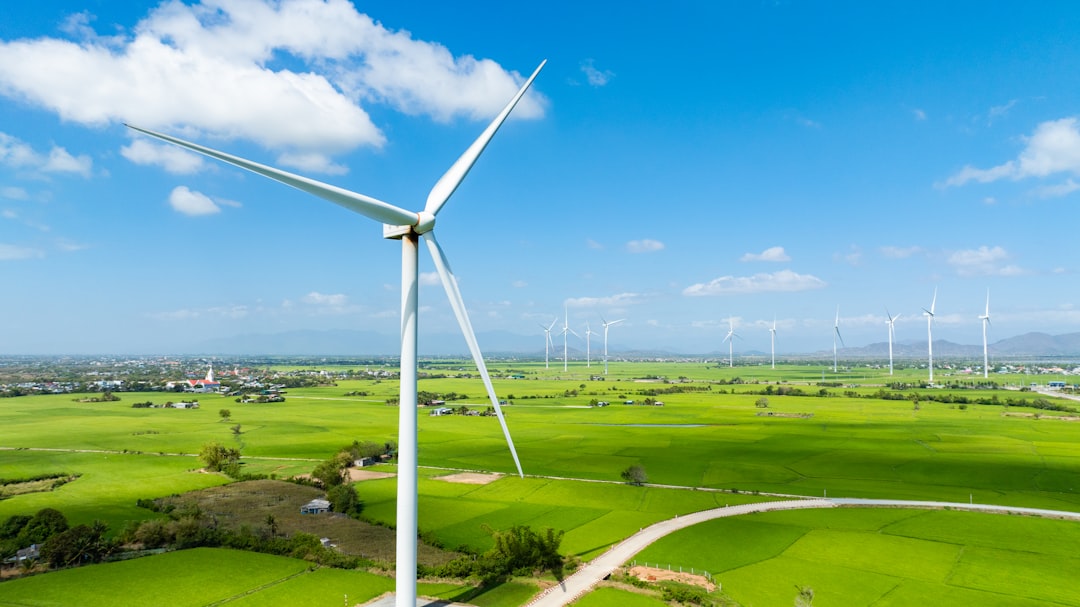
Discover impactful CSR initiatives for clean energy and sustainability in 2026. Explore innovative strategies that make a difference!
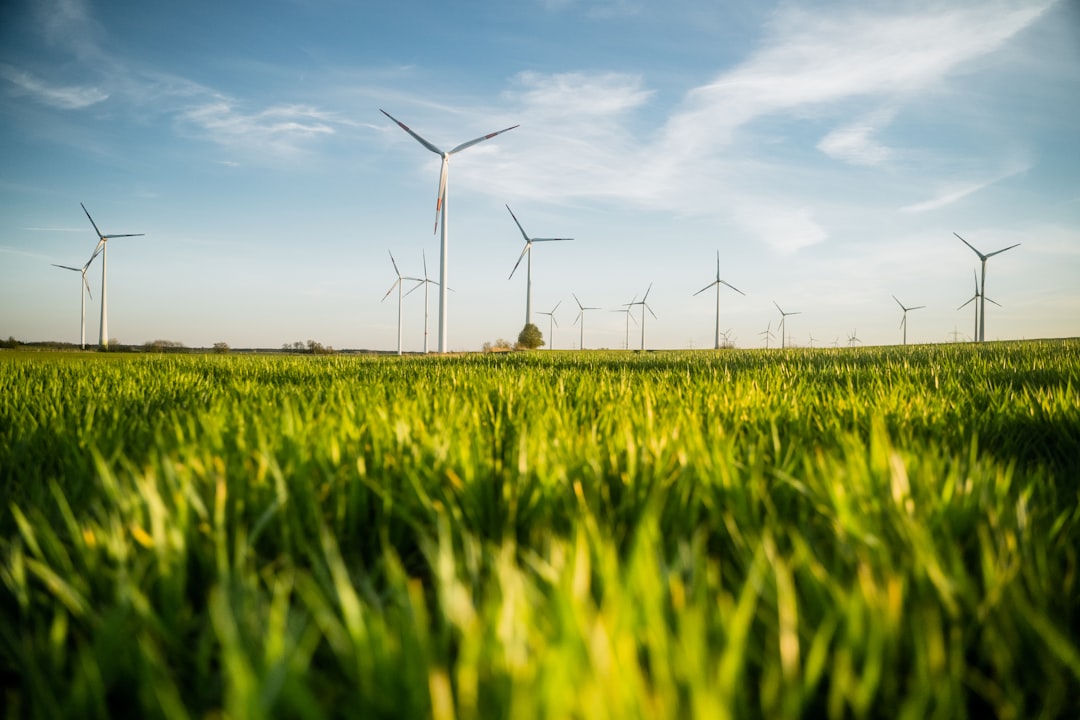
Explore how clean energy solutions, like clean cookstoves, pave the way for a sustainable future driven by policy changes.
Copyright © 2025 EARTHFIT. All Rights Reserved. Designed and developed by Five Online