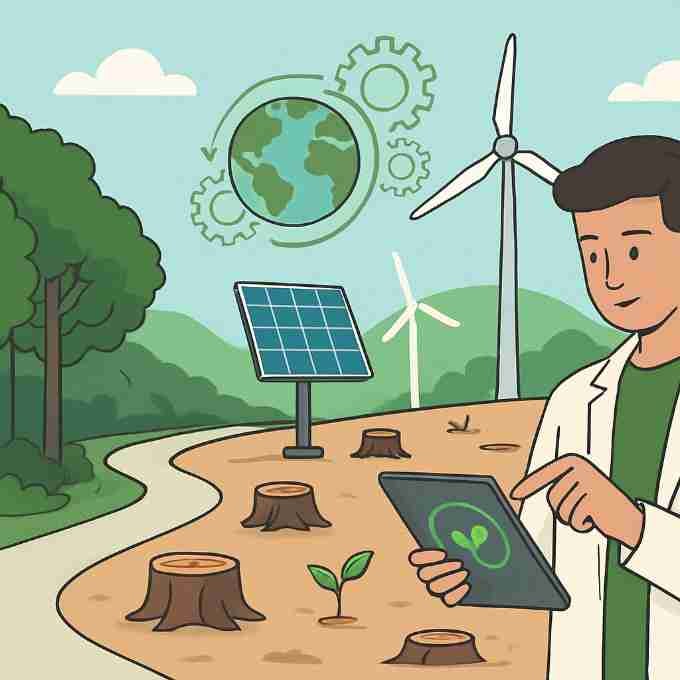
Deforestation remains one of the most pressing environmental issues facing the world today. Forest loss not only threatens biodiversity but also contributes significantly to climate change. As global awareness increases, organizations, governments, and communities are turning to innovative solutions to combat these threats. Among these, sustainable technology plays a vital role in addressing the root causes of deforestation.
Achieving net-zero emissions has become a central goal, emphasizing the importance of halting ecosystem degradation while promoting carbon neutrality. This shift toward sustainable tech strategies is redefining how we manage and conserve forest resources.
Recent advancements in sustainable technology include a range of innovative tools and practices designed to monitor, prevent, and reverse deforestation. Satellite imagery and remote sensing technologies now provide real-time data on forest cover changes, enabling early detection of illegal logging activities. Drones equipped with sensors are also used to patrol vast forest areas more efficiently, reducing human resource constraints. Additionally, advances in artificial intelligence facilitate predictive analytics to identify risky zones and develop targeted conservation strategies.
In the corporate sector, companies are increasingly adopting eco-friendly practices and investing in sustainable supply chains. Reforestation projects supported by tech platforms are expanding rapidly, aiming to restore degraded lands. Innovations in biotechnologies are enabling the development of drought-resistant tree species, which are essential in areas affected by climate change. Moreover, blockchain technology is being used to ensure transparency and traceability in timber supply chains, preventing illegal logging and promoting responsible sourcing.
The integration of these technologies signals a significant shift in how deforestation is tackled globally. The use of satellite imagery and remote sensing provides policymakers with critical data, making enforcement more effective. Drones and AI-driven analytics enable proactive measures rather than reactive responses, shifting the focus toward prevention. These developments collectively contribute to efforts aimed at achieving net-zero emissions by preserving existing forests and fostering sustainable land use practices.
Furthermore, technological innovations facilitate community engagement and local stewardship.
For instance, mobile platforms help indigenous communities monitor forest health and report illegal activities. This democratization of data enhances transparency and ensures that conservation efforts include local voices. It also underscores the importance of aligning technological efforts with social and environmental justice, ensuring that solutions benefit all stakeholders.
However, challenges remain. High costs associated with deploying advanced technologies can limit access for developing regions. There is also a need for robust policies and international cooperation to maximize impact. The complexity of ecological systems demands multi-faceted approaches, combining technology with traditional knowledge and sustainable land management practices.
The adoption of sustainable tech strategies holds significant implications for the fight against deforestation and the pursuit of net-zero emissions. As these tools become more affordable and widespread, their capacity to monitor and manage forests effectively will improve. This could accelerate progress toward international climate targets, such as those outlined in the Paris Agreement. Enhanced data collection and transparency will also strengthen accountability among corporations and governments alike.
Looking ahead, the integration of traditional forest management methods with cutting-edge technology will likely become standard practice. Increasing reliance on artificial intelligence, machine learning, and automation can streamline conservation efforts and optimize resource allocation. Additionally, the development of new green technologies will promote eco-friendly land use practices that support biodiversity and climate resilience.
The future of combating deforestation is intrinsically linked to technological innovation and global collaboration. Initiatives focused on capacity building in developing countries are crucial, enabling local communities to leverage these tools effectively. As global efforts intensify, the vision of achieving a sustainable, forest-rich world is within reach. These strategies not only contribute to overcoming environmental challenges but also support economic growth aligned with responsible resource management.
Addressing deforestation through sustainable technology is essential for achieving net-zero emissions and ensuring a healthy planet for future generations. The rapid pace of technological advancements provides powerful tools for conservation, monitoring, and restoration efforts. As the world adopts these innovations, there is a promising pathway toward more resilient forests and a stable climate. Central to this effort is the effective deployment of technological solutions that harmonize environmental, social, and economic goals.
Earthfit Solutions stands at the forefront of supporting these strategies. Through its expertise in technology-driven solutions, Earthfit Solutions helps organizations implement sustainable practices that preserve forest ecosystems and promote carbon neutrality.
By harnessing cutting-edge tools and fostering innovative approaches, Earthfit Solutions ensures that efforts to combat deforestation are effective, transparent, and scalable. Ultimately, integrating sustainability and technology paves the way for a more sustainable future, with healthy forests playing a vital role in our global climate strategy.

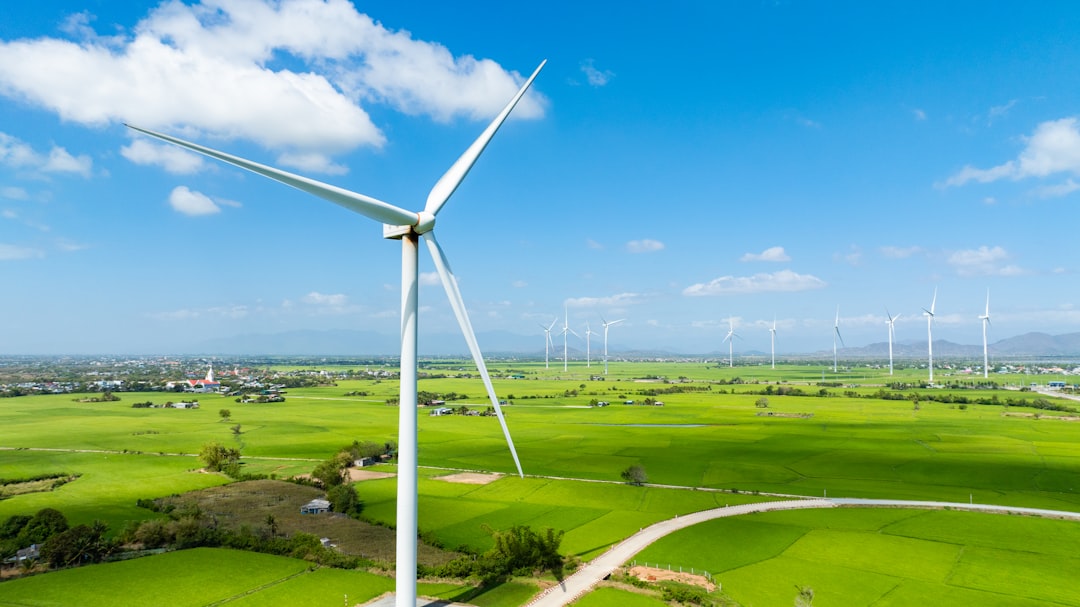
Discover impactful CSR initiatives for clean energy and sustainability in 2026. Explore innovative strategies that make a difference!

Explore how clean energy solutions, like clean cookstoves, pave the way for a sustainable future driven by policy changes.
Copyright © 2025 EARTHFIT. All Rights Reserved. Designed and developed by Five Online